Sign up with Google
 Sign in with Zoho

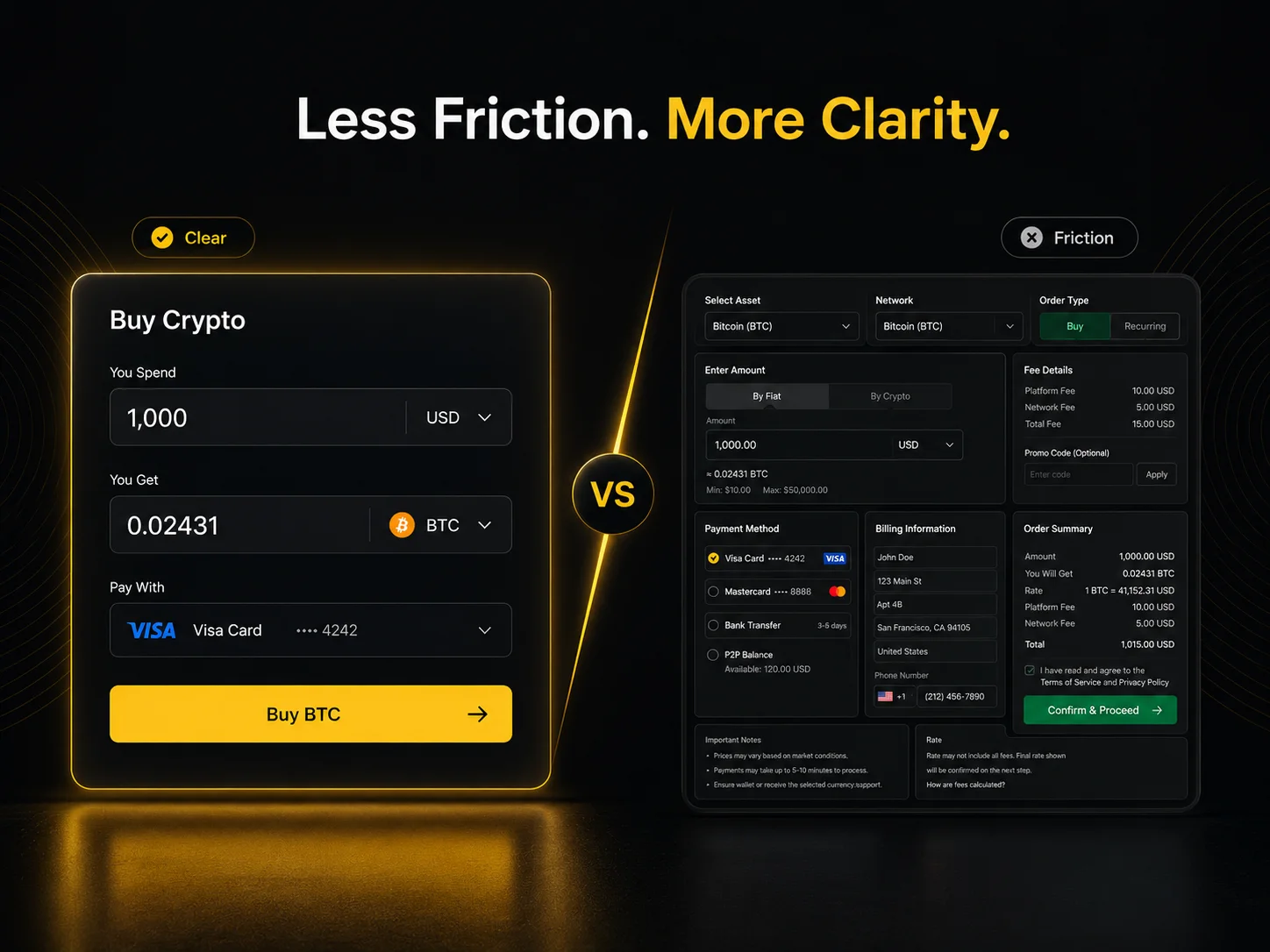
When people compare crypto platforms, the conversation usually starts with features.
How many trading pairs?
How many order types?
How many indicators?
How many tools?
Those things matter, but over time I’ve found myself paying more attention to something less obvious:
friction.
By friction, I mean all the small moments that make a platform feel harder than it needs to be.
A menu that takes too long to find.
An order screen that feels crowded.
Fees that are difficult to understand.
A withdrawal process that leaves you wondering what happens next.
None of these things sound dramatic on their own.
But together, they shape the entire experience.
Clarity matters more than I expected
When I open a platform, I want to understand the important things quickly.
Where is my position?
What is my actual exposure?
Where can I change an order?
What will this trade cost?
The more clearly those questions are answered, the less attention I have to spend on the interface itself.
That matters because trading already requires enough focus.
The platform should not become another problem to solve.
The real test is when the market moves
Most interfaces look fine when the market is quiet.
The difference becomes much more obvious when prices start moving quickly.
That is when every extra click, confusing menu, or unclear number suddenly matters more.
A platform does not need to feel “simple” in the sense of having fewer tools.
It needs to feel understandable under pressure.
Withdrawals tell you a lot
I also think withdrawal experience is underrated.
Trading features usually get the attention, but withdrawals are one of the moments when trust becomes very practical.
I want the steps to be clear.
I want the fees to be visible.
I want to know the status of the request.
I’ve used different platforms, including BYDFi, and this is one of the areas where I now pay much more attention than I used to.
More features are not always more useful
A long feature list can look impressive.
But if the basics are difficult to use, extra features do not fix the problem.
I would rather have a platform that helps me understand what is happening and lets me act clearly than one that gives me fifty extra options I rarely use.
That is probably how my definition of a “good platform” has changed.
I care less about how much it can show me.
I care more about how little friction it puts between me and the decision.
Personal opinion only. Not financial advice.