Sign up with Google
 Sign in with Zoho

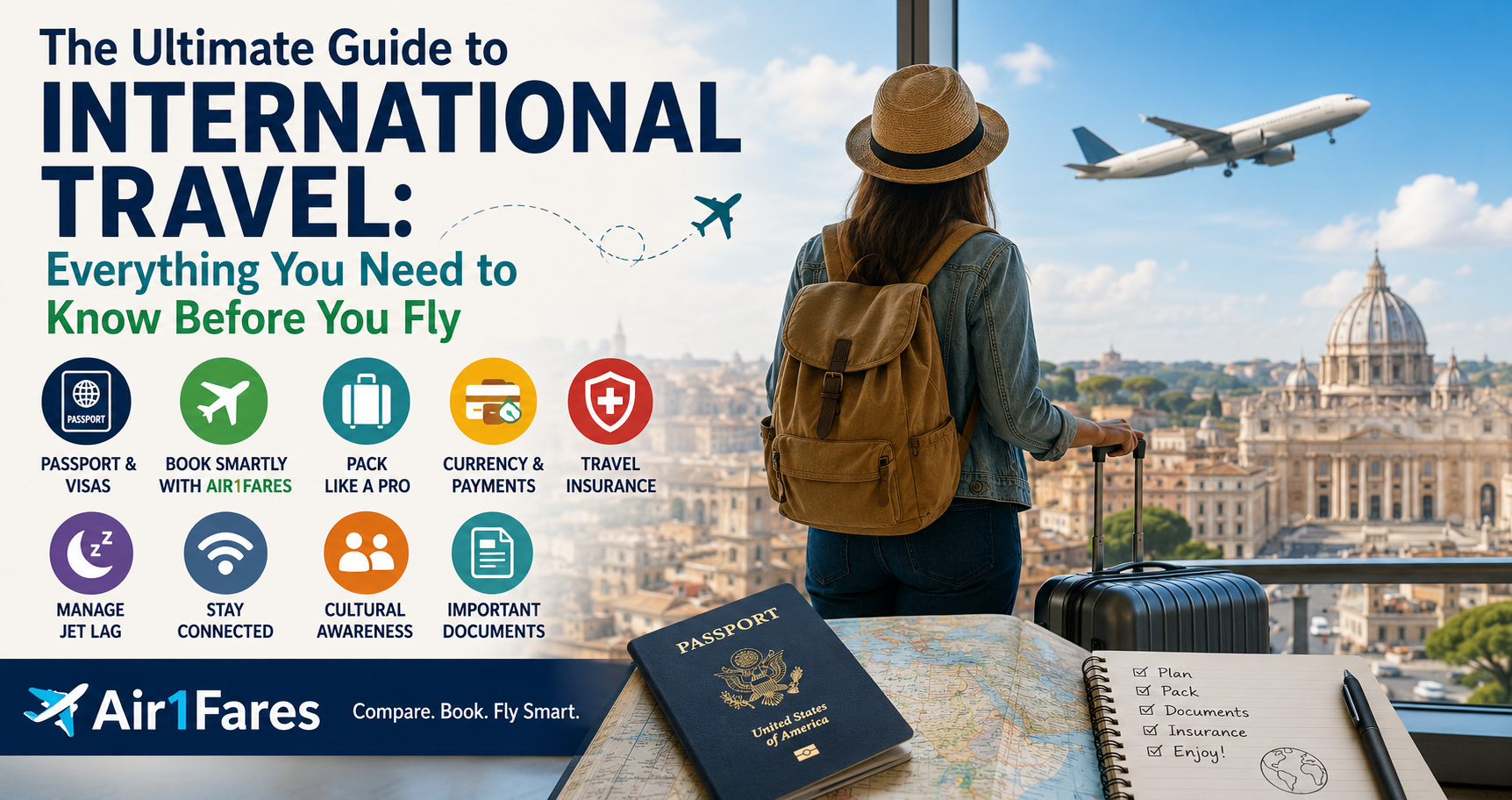
International travel is one of the most transformative experiences a person can have. There's something profoundly life-changing about landing in a city where the street signs are in a different language, the food is unlike anything you've tasted, and the culture challenges your assumptions about how the world works. But as magical as international travel can be, it also demands careful planning. From booking the right flight on Air1Fares to navigating customs, visas, and jet lag, there's a lot to manage. This comprehensive guide walks you through everything you need to know before you take that first international flight.
Understand Your Passport and Visa Requirements
Before anything else, check the validity of your passport. Many countries require that your passport be valid for at least six months beyond your planned departure date. If your passport is expiring soon, renew it before booking. Next, research visa requirements for your destination. Some countries offer visa-on-arrival or e-visa options; others require you to apply weeks or months in advance through an embassy. Never assume you can sort this out at the airport.
Book Smartly with Air1Fares
International flights represent the single biggest expense in most travel budgets. Using a comprehensive fare comparison site like Air1Fares allows you to compare hundreds of routes, airlines, and departure times to find the optimal combination of price and convenience. Look for multi-city options if you plan to visit multiple countries — they're often cheaper than separate round trips. Also consider layover options: a strategic stopover in a connecting city can give you a free mini-vacation without spending extra on flights.
Pack Like a Pro
International travel often involves multiple climates, dress codes, and activity types. The golden rule is to pack light and layer. A carry-on and a personal item are sufficient for trips up to two weeks for most seasoned travelers. Check baggage allowance policies for every airline on your itinerary — international carriers sometimes have different rules for different legs, and budget carriers on connecting routes can be particularly strict. Overpacking leads to checked baggage fees, physical strain, and travel inefficiency.
Understand Currency and Payments Abroad
Inform your bank before you travel to avoid having your card frozen for suspicious activity. Carry a small amount of local currency for arrival — enough to cover a taxi or transit to your hotel. ATMs abroad typically offer better exchange rates than airport currency exchange kiosks. Consider a travel credit card with no foreign transaction fees, which can save you 3% on every purchase made abroad.
Health and Travel Insurance
Never travel internationally without travel insurance. A single medical emergency abroad can result in costs that dwarf the price of even the most expensive flight. Good travel insurance covers emergency medical care, trip cancellation, lost baggage, and travel delays. Some credit cards offer basic travel insurance as a perk, but read the fine print carefully to understand coverage limits.
Manage Jet Lag Intelligently
Crossing multiple time zones disrupts your circadian rhythm — the internal clock that governs sleep, hunger, and alertness. Mitigate jet lag by gradually shifting your sleep schedule a few days before departure, staying hydrated during the flight, avoiding alcohol, and getting natural sunlight at your destination as soon as possible. Many experienced travelers swear by melatonin supplements taken at the destination's local bedtime for the first few nights.
Stay Connected Abroad
Being stranded without mobile connectivity in a foreign city is stressful and potentially dangerous. Options include: purchasing an international SIM card upon arrival, activating an international plan with your home carrier, or buying a portable Wi-Fi hotspot. Research connectivity before you land — don't rely on finding a solution at the airport.
Cultural Awareness and Etiquette
Every country has its own social norms, and what's perfectly acceptable at home may be offensive elsewhere. Spend time before your trip learning basic phrases in the local language, understanding tipping customs, and familiarizing yourself with dress codes — particularly if you plan to visit religious sites. Locals universally appreciate when travelers make even a minimal effort to respect their culture.
Keep Important Documents Accessible
Carry digital and physical copies of your passport, visa, travel insurance policy, hotel bookings, and emergency contact numbers. Store digital copies in a cloud service so they're accessible even if your phone is lost or stolen. A money belt or hidden pouch provides extra security in crowded tourist areas or busy transit hubs.
Conclusion
International travel is an investment in yourself — in perspective, curiosity, and connection to the wider world. With thorough preparation and the right tools like Air1Fares for booking, the logistics become manageable, leaving you free to focus on the experience itself. Start planning your next international adventure today.