Sign up with Google
 Sign in with Zoho

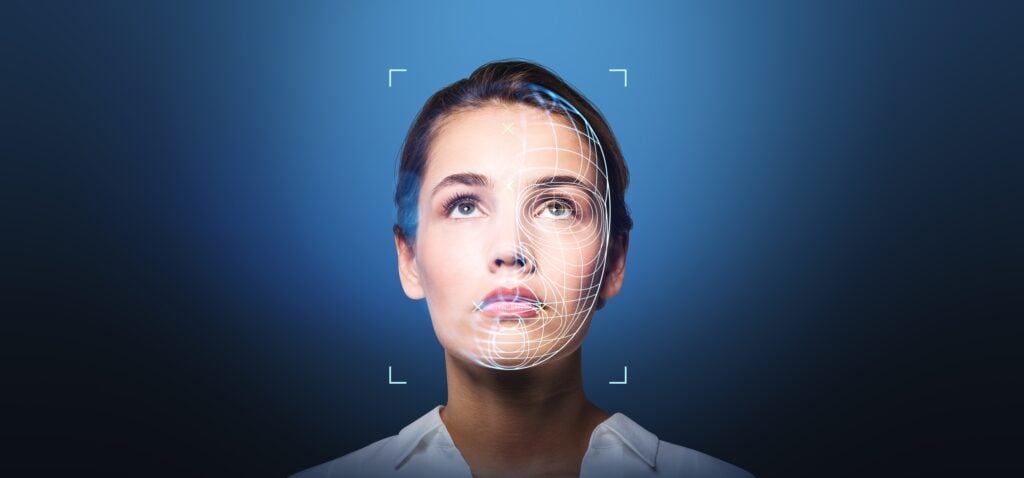
Digital transformation has transformed the way that businesses engage with their customers. From opening bank accounts and using financial services to registering on gaming platforms and signing banking agreements, identity authentication has gone online. While this shift has increased speed and ease of access, it has also opened up serious security risks. Cybercriminals are now taking advantage of weak authentication systems through stolen credentials, manipulated pictures, and synthetic identities.
Facial verification has become one of the most powerful solutions for secure authentication of digital identity. By using biometric technology to ensure that a person's face matches up with an official identity document, face verification is the key factor for strengthening onboarding processes and reducing fraud risks.
This extensive guide makes you aware of how facial verification operates and how it has become indispensable for maintaining digital security, as well as effective and useful for compliance and fraud prevention in any industry.
What Is Facial Verification?
Facial verification is a biometric authentication that verifies the real-time photograph of the person's face matches the stored photograph, normally in a government-issued identification document. Unlike the traditional systems using passwords, facial verification is based on the unique biological features that are not easy to replicate.
It is important to make a distinction between facial verification and general facial recognition. Facial verification does a one-to-one comparison. It detects whether the image of a user's face corresponds to a specific identity document or record stored. Facial recognition, on the other hand, usually means to identify a person out of a large database.
Facial recognition verification has been widely used in digital onboarding, financial services, healthcare platforms, online gaming, and secure enterprise systems, where the trait-based authentication must be accurate.
Why Digital Identity Authentication is Important
As businesses increasingly use online services, it is important to authenticate the user. Weak non-complexity identity controls can cause account takeovers, financial fraud, data breaches, and regulatory violations.
Traditional authentication methods like passwords and security questions are not safe from phishing-type attacks and social engineering attacks. Stolen credentials will be sold very cutely in dark web, so Password-Based systems are unreliable.
With the help of facial verification, one can provide biometric security to the system, which decreases the chances of unauthorized access significantly. Since the facial features are unique for each individual, the biometric authentication method stands at a better protection level than knowledge-based methods.
In the regulated industry like banking, fintech, and digital asset platforms, strong authentication of identity is not only a security requirement but also a legal or regulatory arrangement, too.
Working of Facial Verification
Facial verification systems work in a well-structured process that involves biometric capture, extraction of data, and AI-powered analysis.
The process starts with a user uploading a document issued by a government such as a passport or national ID card. The system takes the photo and personal information from the document by using an optical character recognition technology.
Next, the user is asked to take a live selfie or video. Advanced algorithms are used to detect the position of the facial landmarks such as the distance between eyes, nose structure, jawline structure, and other biometric features.
The system then conducts a one to one comparison between the live image and the photo of the document. If the similarity score is within predefined thresholds then it is seen that the identity is verified.
Modern facial verification solutions are also equipped with liveness detection technology. This feature is aimed to ensure that the user is physically present at the time of the verification process and not trying to bypass the system by using a static image, mask or prerecorded video.
The Role of Artificial Intelligence in Facial Verification
Artificial intelligence is one of the keys to the effectiveness of facial verification systems. Machine learning algorithms utilize thousands of pieces of facial data that assure an accurate and reliable comparison.
AI models are constantly getting better through learning from new data patterns. This adaptability makes it also possible for facial verification systems to uncover new technology attempts that could be used in fraud, such as deepfake attempts and manipulated images.
AI-driven systems can also evaluate such environmental factors as the illumination, image quality, or consistency of facial movement. These extra checks help to increase the accuracy of checking and lower false positives.
Due to AI integration, the modern myth of facial verification platforms allows them to score well in terms of accuracy and speed, thus being suitable for real-time digital onboarding.
Preventing Identity Fraud Using Facial Verification
Identity fraud also continues to be among the top problems for digital ecosystems. Fraudsters have also tried to create accounts using stolen documents or synthetic identity.
Facial verification helps to reduce such risks by ensuring that the person holding the identification document is the actual owner of this document. Even if a fraudster somehow obtains someone else's ID, it is not something they can easily reproduce with the biometric features needed for verification.
Attempts at spoofing can be further prevented by liveness detection. The system may require users to blink or to turn their heads or make specific movements in order to prove authenticity. With these actions it's extremely difficult to dupe the system with static images.
By the use of both methods (source level document and method level biometric) facial verification provides a multi-level defense against identity fraud.
Helping to Facilitate KYC and Regulatory Compliance
Regulatory frameworks across the world are in place to ensure organizations must verify the identity of their customers before offering services. Know Your Customer regulations require correct identification of customers to stop financial crimes and unauthorised access to.
Facial verification enhances KYC compliance ensuring that identity checks are both correct and safe. Automated processes of verification create digital tracks for auditors to prove that they were compliant during inspections by the regulatory body.
In addition to creating the initial onboarding, facial verification can be used for periodic re-verification and high-risk transactions. This constant authentication approach can support anti-money laundering requirements and offset compliance risk.
Organizations that incorporate facial verification into their identity workflows are setting up a robust compliance infrastructure by global standards.
Improving User Experience without Compromising Security
One of the larger challenges with digital onboarding is how to balance security and user convenience. Lengthy verification processes can put off actual customers and add to drop-off rates.
Facial verification is the ideal combination to enhance the user experience by allowing quick and easy authentication. Most of the verification processes are completed in a matter of seconds, and users gain access to services without wait times.
Because the technology is compatible with smartphones and webcams, the users can complete verification from anywhere. This convenience allows for better customer satisfaction without compromising good security controls.
When done correctly, facial verification will expand conversion rates thanks to how easy they make secure onboarding.
Applications Across Industries
Facial verification is being widely used across many industries where digital identity verifications are needed.
For banking and fintech industries, facial verification is securing the account opening and financial deals. It prevents fraudulent registrations while ensuring that everything is in compliance with the regulations.
For online gaming and entertainment platforms, a change can be seen in the prevention of underage access and ill or non-authorized usage of accounts, all because of facial verification. It makes sure that people comply with age and jurisdictional requirements.
For healthcare platforms, facial verification helps secure patient data and ensure authorized access to sensitive medical records.
Enterprise organizations use facial verification to provide remote access for employees and secure confidential systems.
The versatility of facial verification means it is an important part of modern approaches for digital security.
Tackling Privacy and Data Protection Issues
While facial verification has great benefits in terms of security, privacy issues are also important. Biometric data is sensitive, and organizations must be responsible with it.
Reputable facial verification platforms employ encryption, secure storage, and data minimization measures to ensure user information security. Compliance with data protection regulations such as GDPR is an issue.
Many systems use a framework known as privacy-by-design, which means that biometric information is processed securely and is not stored any longer than it is necessary.
We can use biometric authentication in ways that are transparent about how we would use and share data, so as to create trust with customers and address any data that is not ethically implemented.
Facial Verification Technology: The Future
Facial verification technology is still evolving at a rapid pace. Advancements in AI, edge computing, and behavioral biometrics are informing the future of digital identity authentication technology.
The systems in the future can be used with facial verification combined with voice recognition and device based authentication for multi-layered security. Continuous authentication methods would have a platform authenticate users over the sessions instead of only when users login.
As cyber threats become increasingly advanced, biometric authentication will play an increasingly important role in safeguarding digital ecosystems.
Facial verification is likely to continue being a mainstay of secure digital ID solutions for years ahead.
Conclusion
Facial verification is a new and powerful tool in authenticating digital identities for use in an increasingly online world. By using a combination of biometric analysis, artificial intelligence, and liveness detection, it is able to offer a reliable way of confirming user identities.
This technology not only helps to prevent identity fraud but also helps regulate compliance, improve user experience, and increase security for the platform. As digital services grow in industries, businesses need to adopt sophisticated ways of authenticating to keep their businesses and their customers safe. Facial verification is the new generation of identity security. Organizations using effective facial verification systems today will be more prepared to navigate or adapt to future changes in the fraud risk and regulatory landscape in a digital world.